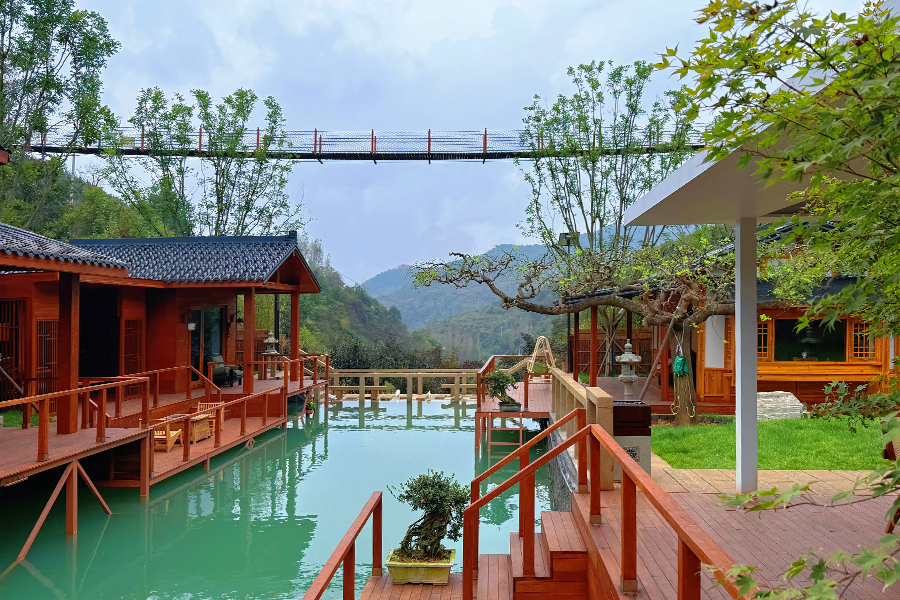
In autumn, the Southern Taihang Mountains boast clear waters and lush scenery, with a crisp, refreshing atmosphere. Tucked deep within a valley, Xingxi Village in Yangcheng County has shed its former rustic appearance as a remote mountain village and now radiates a warm, elegant charm. Strolling through the village, one is surrounded by vibrant landscapes and serene scenery; every corner exudes a poetic charm rivaling that of the Jiangnan region, compelling visitors to pause and take photos, jot down their impressions, and wholeheartedly promote this ancient Taihang village that has quietly undergone a metamorphosis.
Recently, a media delegation visited Xingxi Village to explore its vibrant rural revitalization efforts firsthand. Through the four key themes of ecology, aesthetics, homestays, and accessibility, they examined how Xingxi Village, drawing on the experience of the “Ten Million Project,” has forged a path of revitalization that integrates agriculture, forestry, culture, tourism, and wellness.
Keyword 1: Ecology—Laying a Solid Foundation for Rural Development.
Lush mountains and clear waters are Xingxi Village’s most precious natural endowments. Nestled in the heart of the Southern Taihang Mountains and adjacent to the Meng River Scenic Area, the village is embraced by mountains and traversed by a clear stream. With lush forest vegetation and excellent air quality, it boasts unparalleled pristine natural landscape resources. Thanks to its superior location and natural conditions, Xingxi Village combines the rugged character of the Taihang Mountains with the gentle charm of the river valley, making it a rare, ecologically sustainable and livable village in the region.
In the past, constrained by its remote mountainous location and limited transportation infrastructure, Xingxi Village struggled to realize the value of its high-quality ecological resources, and its scenic advantages failed to be effectively transformed into developmental strengths. Since thoroughly studying and applying the lessons from the “Ten Million Project,” Xingxi Village has adhered to the principles of ecological priority and green development, systematically advancing river channel management, shoreline restoration, vegetation conservation, the revitalization of wasteland, and the improvement of the living environment. Today, the village features clear waters, green banks, lush forests, and beautiful scenery, with a well-maintained and tidy appearance. It has formed a harmonious landscape where the village is nestled within the scenery and the scenery is interwoven with the village, laying a solid ecological foundation for the development of the cultural and tourism industries, the enhancement of rural quality and efficiency, and increased income for the local residents.
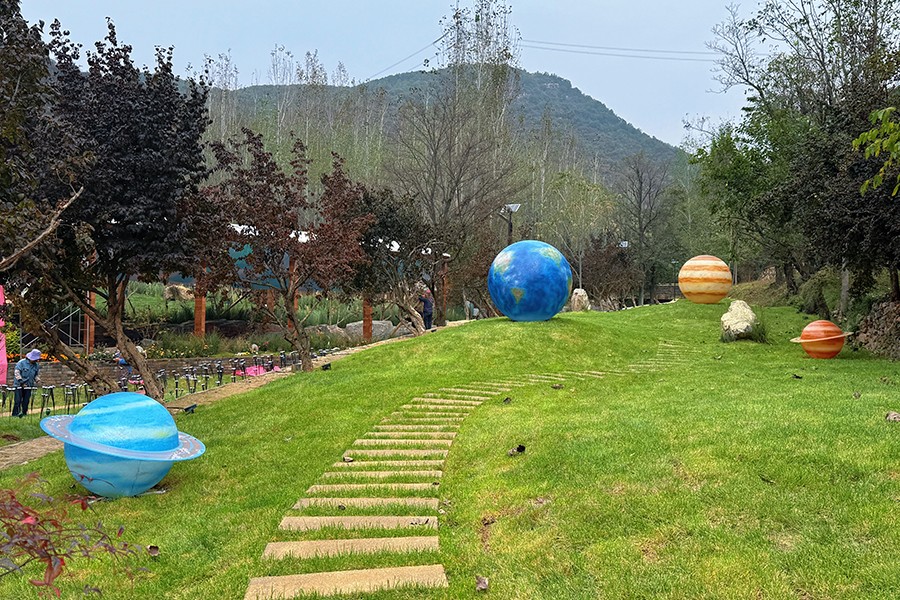
Keyword 2: Aesthetics—Meticulously Crafting the Rustic Charm of the Ancient Village.
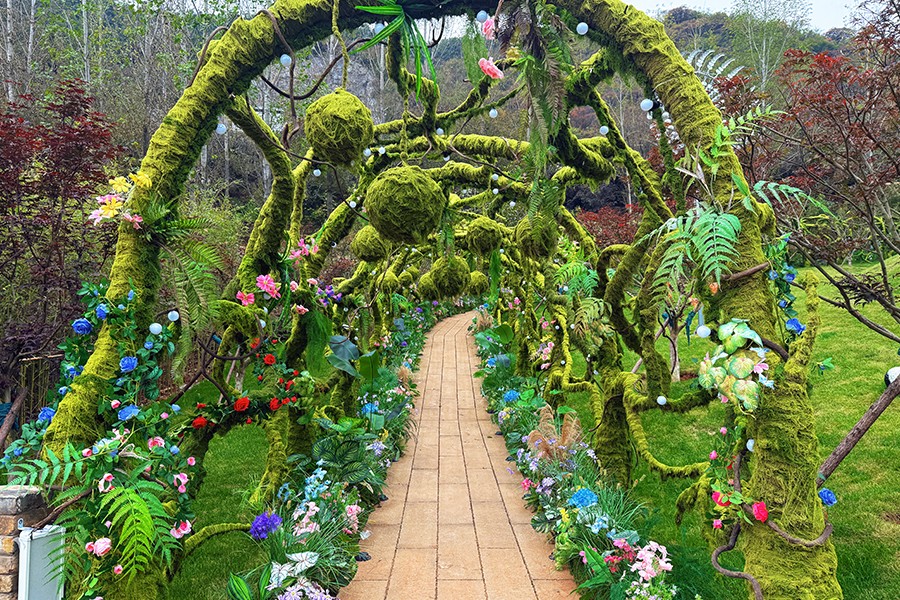
If a pristine ecosystem serves as Xingxi Village’s natural backdrop, then design aesthetics are the unique quality that sets this ancient village apart. Xingxi Village has meticulously refined its overall appearance through a designer’s perspective and aesthetic thinking—from the landscape design surrounding the village to the layout of its streets and walkways, and on to the interior design of its guesthouses. This has achieved a high-standard aesthetic upgrade, ensuring that every step offers a scenic view, every corner is a photo spot, and every frame is a viral-worthy scene.
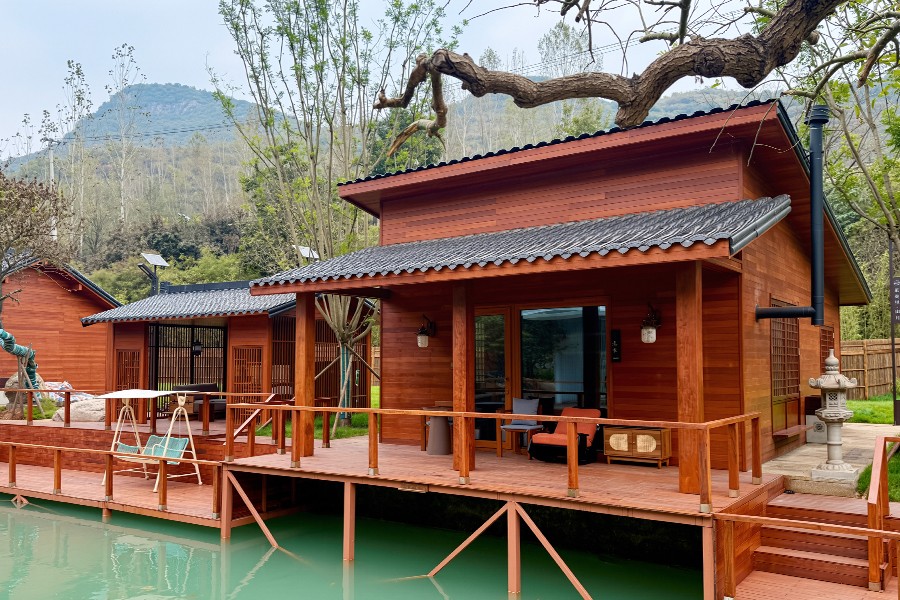
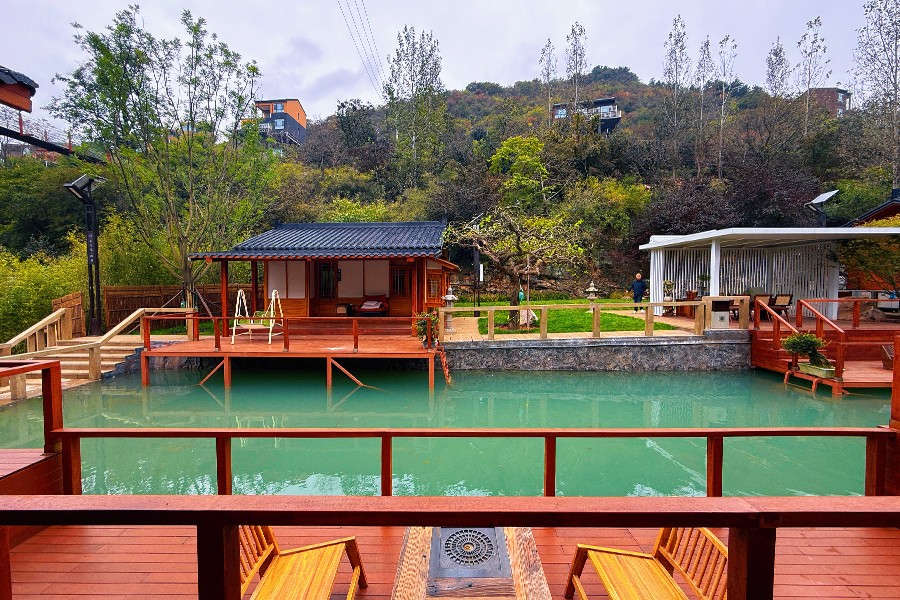
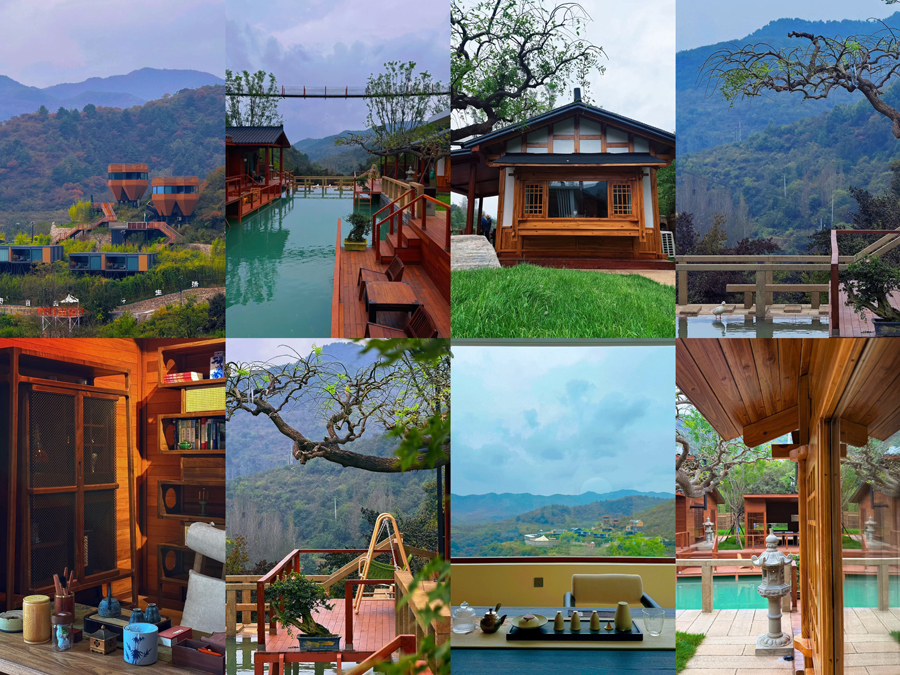
The wooden guesthouse cottages along the river are built right on the water’s edge, with wooden decks extending toward the surface. The silhouettes of the houses, trees, and mountains are reflected in the clear waters, creating a pristine and soothing scene. Waterfront decks, leisure swings, and riverside tea pavilions are artfully scattered throughout the landscape, creating a richly layered composition with a harmonious balance of density and openness. As you stroll through the village, you can admire the gentle murmur of the stream up close and gaze upon the layered peaks of the Taihang Mountains in the distance. The landscape and architecture blend seamlessly—no need to pose for a photo; every casual snapshot captures a beautiful scene brimming with the poetic charm of Jiangnan.
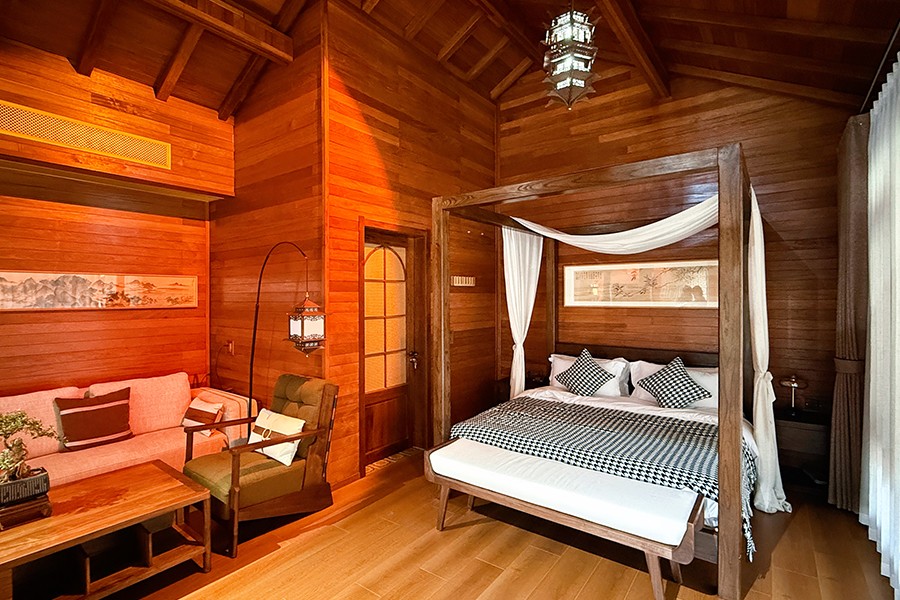
This aesthetic ingenuity is further integrated into the guesthouse’s interior design, which skillfully incorporates the outdoor scenery. The guest rooms feature large floor-to-ceiling windows and a layout that maximizes natural light, cleverly framing the outdoor landscapes—including rocky outcrops, greenery, flowing streams, and the distant Taihang Mountains—within the interior. This creates a sense of openness where “the window serves as a picture frame, the scenery shifts with the guest’s movement, and the guest is immersed within the painting.” In some room types, rockeries and decorative greenery are artfully arranged before the windows, allowing guests to admire the rustic charm of the rocks and the vitality of nature while sitting quietly indoors. The tea room’s massive windows face the rolling mountains; with the tea set elegantly arranged, the distant peaks come into view and a gentle breeze flows through the room, facilitating a seamless dialogue between people and the natural landscape.
Keyword 3: Industry—Unleashing the Endogenous Driving Force for Prosperity.
While scenic beauty is important, industrial excellence is even more crucial. Building on its high-quality ecological foundation and the achievements of its aesthetic transformation, Xingxi Village has strategically developed a homestay industry system, completely breaking free from the bottleneck of homogenization in rural homestays. The village has innovatively implemented a “village collective + enterprise + farmers” cooperative model, partnering with the cultural tourism platform Ctrip Group to create the high-standard, standardized, and branded “Taihang Honeyland Ctrip Vacation Farm.” This initiative has enabled professional operation, standardized management, and market-oriented promotion of the homestay industry.
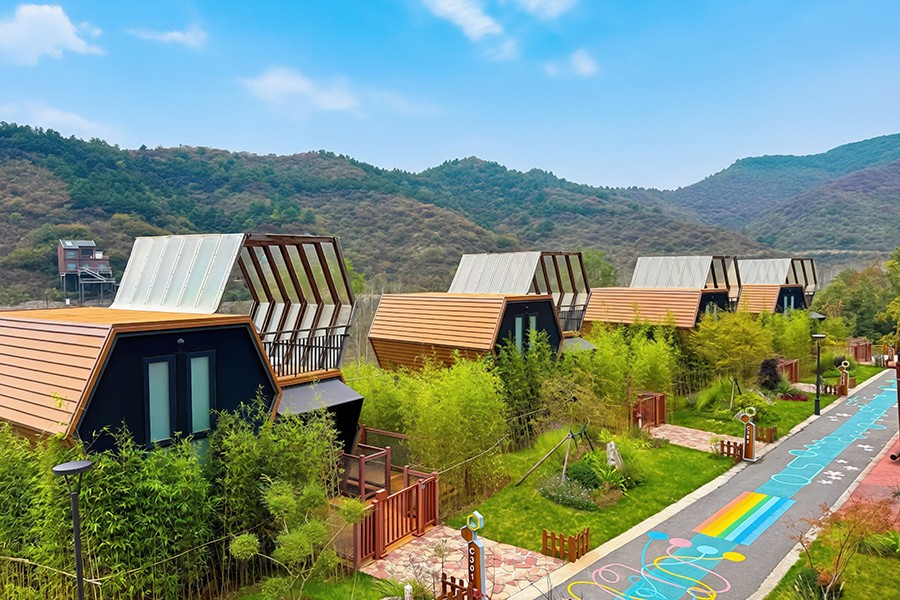
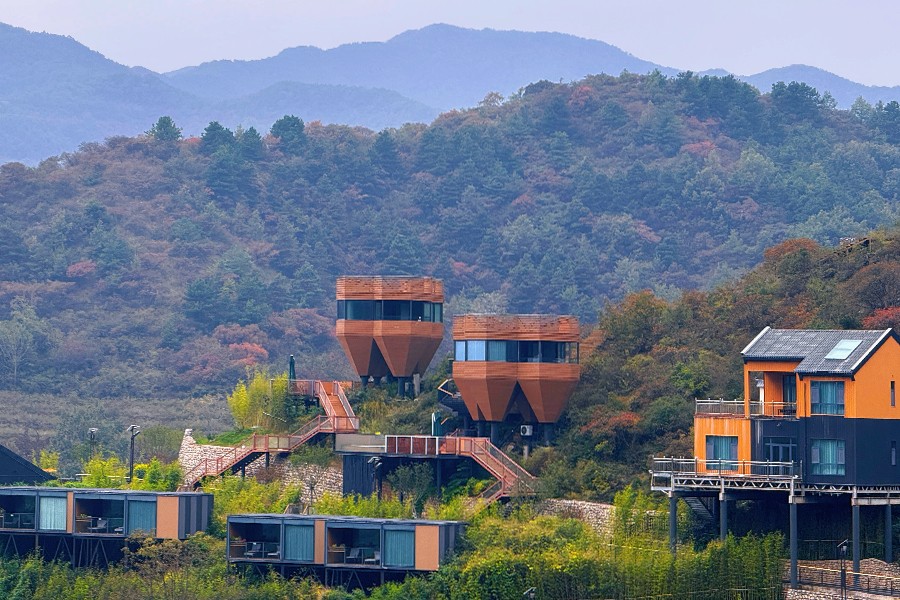
The village’s homestay offerings are diverse and distinctive, forming a three-dimensional layout characterized by “waterfront views of the stream and mountain vistas from the hillside.” Along both banks of the stream, waterfront log cabins are built alongside the water; guests can see the stream through their windows and live with the water at their doorstep, enjoying a tranquil, therapeutic, and poetic Jiangnan-style waterfront vacation experience; On the highlands and in the ravines halfway up the mountains, distinctive “honeycomb” homestays are built against the slopes in a staggered arrangement, hidden among the sea of trees and mist, offering a relaxing, immersive experience in the mountains and a rejuvenating, oxygen-rich wellness retreat. These two styles complement each other, each with its own unique setting and distinct experience, catering to the diverse needs of various guest groups, including family trips, girls’ getaways, leisure and wellness, and team-building vacations.
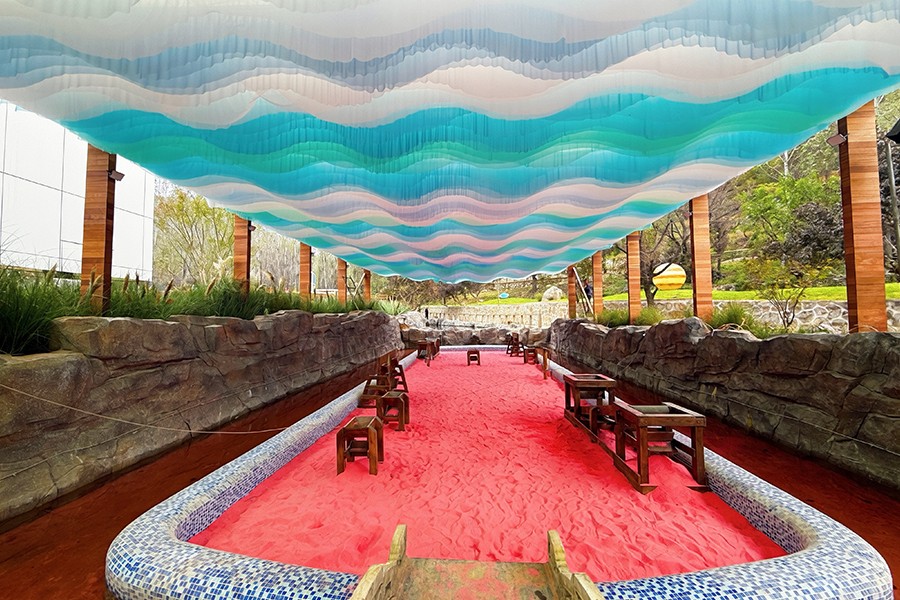
Leveraging the traffic-driving effect of the homestay cluster, Xingxi Village has continuously expanded its cultural and tourism industry chain, introducing diverse business formats such as wilderness camping, nature-based educational tours, forest-based experiences, and rural leisure activities. This has established a new rural industrial model characterized by “homestays as the core, multi-sector synergy, and region-wide income growth.” Through resource revitalization, business model upgrades, and brand empowerment, this once-obscure village hidden deep in the mountains has successfully transformed into a “Sweet Town” renowned far and wide for its rich variety of attractions and thriving popularity. It has truly and steadily converted its ecological beauty and rural charm into tangible economic value from which villagers can benefit.
Keyword 4: Accessibility—Paving the Way for Rural Revitalization.
When roads are open, all industries flourish; when pathways are unobstructed, everything is renewed. For a long time, the village of Xingxi was surrounded by mountains and plagued by rugged, winding roads—a major obstacle to its development that made it difficult to showcase its high-quality natural landscapes and historic village heritage to the outside world. With the completion of the Taihang No. 1 Tourist Highway and the Yangmang Expressway, Xingxi Village has broken through geographical barriers and locational constraints. It has transformed from a remote mountain outpost into a transportation hub for landscape and cultural tourism, thereby overcoming the developmental challenge of being “hidden away and unknown to the outside world.”
A smooth and multi-dimensional transportation network has not only greatly facilitated villagers’ daily commutes, agricultural work, and the transport of goods, but has also effectively linked surrounding natural landscapes, rural attractions, and cultural and tourism resources, forming a regional framework for coordinated cultural and tourism development. Convenient and efficient access routes enable tourists to arrive easily, stay longer, and enjoy their visits to the fullest, while allowing Xingxi Village’s distinctive homestays, rural businesses, and specialty agricultural products to reach wider markets, gain recognition, and spread far and wide. Smooth roads attract visitors to the village, empower local industries, and enhance brand value. They have paved a solid, unobstructed, and ever-widening path of high-quality revitalization for Xingxi Village, enabling it to continuously expand its cultural and tourism industry, strengthen its rural brand, and optimize the outcomes of its revitalization efforts.
Grounded in ecology, shaped by aesthetics, revitalized through homestays, and empowered by connectivity. Today’s Xingxi Village boasts beautiful scenery, thriving industries, smooth roads, and harmonious communities. Through the vivid implementation of the “10 Million Project” model, this ancient Taihang Village has broken free from traditional rural development patterns. By using aesthetics to elevate the village’s character and homestays to revitalize the entire local economy, it has forged a new path of integrated development that harmonizes agriculture, forestry, culture, tourism, and wellness—a path where visual appeal and economic value coexist, ecology and industry achieve mutual benefit, and substance and aesthetics go hand in hand. (Song Yueying)