“Journey in Jincheng” helps us comprehend Jincheng with bilingual resources, and makes Jincheng known to the world. Hello everyone, nice to see you again! Recently, the TV drama The Lead has become a hit, while short dramas such as The Good Time Has Come and Enemy have gone viral, making traditional opera a new trend among young people. As a local saying goes in Jincheng, where there is a village, there is a temple; where there is a temple, there is an opera stage. This land is home to the earliest surviving Jin Dynasty ancient opera stage in China. The good time for the weekend has come. Let’s step into these ancient stages together and listen to the echoes of time that have passed through thousands of years.
1. Erlang Temple Opera Stage, Wangbao Village, Sizhuang Town, Gaoping City
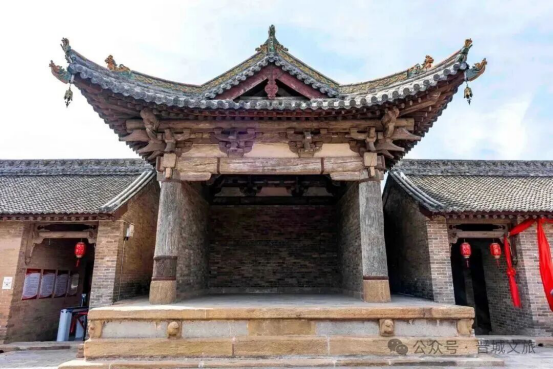
Nestled inside Erlang Temple in Wangbao Village, northwest of Gaoping City, stands an ancient and serene opera stage. Built in the 23rd year of the Dading reign of the Jin Dynasty (1183 AD), it features a pavilion-style structure with a single-eave hip-and-gable roof. As the earliest discovered opera stage nationwide, it bears the 840-year historical imprint of Chinese traditional opera.
Rarely seen in ancient architecture, the stage has no beam frame, with its roof directly supported by bracket sets (dougong). Regarded as the originator of over 3,000 ancient opera stages in Shanxi, this Jin Dynasty structure fills the historical blank in records of early opera performance venues. Notably, the stage is enclosed by thick walls on three sides. The design delivers perfect acoustic effects: audiences can clearly hear the direct sound from performers as well as the reflected sound off the walls. According to academic research, the stage was not originally a single-sided viewing layout when first built in the Jin Dynasty, its current form took shape through renovations in later dynasties.
Having weathered centuries of wind and rain, Erlang Temple Opera Stage is not only an architectural treasure of the Jin Dynasty but also a vital carrier for inheriting opera culture and historical heritage.
2. Jin Dynasty Dance Tower, Yedi Dai Temple, Zezhou County
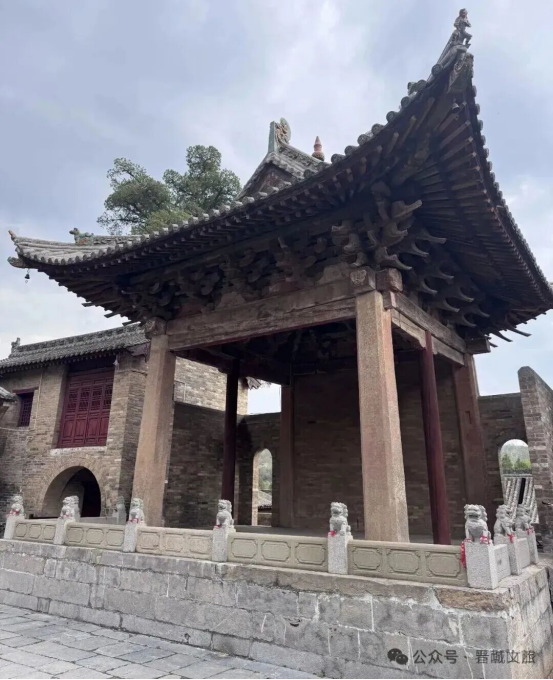
The Dance Tower of Yedi Dai Temple in Zezhou is a well-preserved early Jin Dynasty opera stage relic. It stands on a base about one meter high, with stone pillars at four corners and an octagonal wooden caisson ceiling on top, boasting a concise layout and distinct structural design.
Traces of three Chinese characters “Second Year of Zhenglong” were once discernible on the capital of the northeast stone pillar, dating its construction back to the 2nd year of the Zhenglong reign of Emperor Hailing of the Jin Dynasty (1157 AD). Due to severe weathering, the inscriptions are now blurred, leaving its exact construction year pending further textual research.
What makes it extremely precious is that the platform base, terrace, stone pillars, architraves and railings remain original Jin Dynasty components, while the bracket sets, roof truss and rooftop feature architectural styles of the Yuan and Ming dynasties. This rare structure of Jin foundations with Yuan-Ming upper parts provides invaluable physical evidence for the study of the evolution of traditional Chinese architecture.
3. Fujun Temple Opera Stage, Guobi Village, Jiafeng Town, Qinshui County
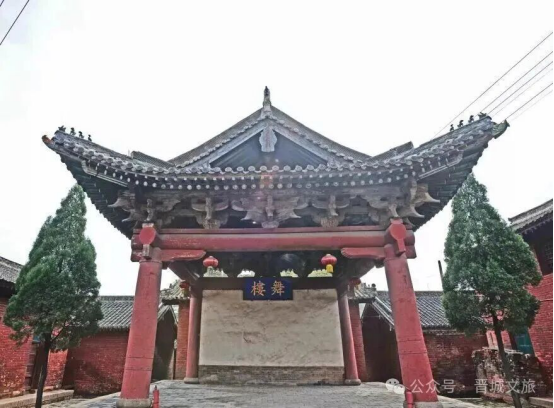
The opera stage of Fujun Temple in Guobi Village, Jiafeng Town, Qinshui County, is a typical masterpiece of mature Yuan Dynasty stage architecture and a landmark relic witnessing the evolution of ancient Chinese opera stages, with a history of around 700 years. Its unique structural design perfectly matched the performance needs of Yuan zaju (Yuan Dynasty opera), recording the development and inheritance of ancient Chinese opera art.
Built of wood with a single-eave hip-and-gable roof and double-layer upturned eaves, the dance tower exudes elegant charm. It sits on a square stone plinth with a solid wall on the southern side, supported by four towering red-lacquered wooden pillars at the corners. It represents the transitional form of Yuan Dynasty opera stages from small pavilion-style platforms to grand hall-style ones.
The highlight of the dance tower is its octagonal caisson ceiling. Constructed with fine interlocking wood pieces without main beams, rafters or iron nails, it layers upward to form a dome. The roof ridge ornaments are original Yuan Dynasty relics, and the peacock-blue glazed roof tiles are of great cultural value.
4. Zhijiao Sanjiao Tang Dance Tower, Lizhai Town, Zezhou County
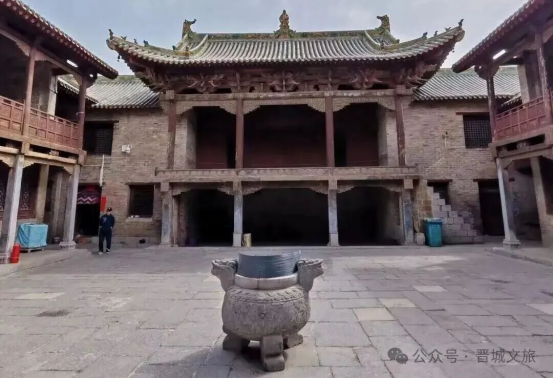
Zhijiao Sanjiao Tang Dance Tower (Dance Tower of Three Teachings, Confucianism, Buddhism and Taoism) is a two-story building with three bays in width and six rafters in depth. It preserves the five-color double-console bracket sets and single-rafter hip-and-gable roof structure. A large number of inscriptions about opera performances remain on its upper floor, serving as crucial physical historical materials for the study of Shangdang opera.
With a gable-and-hip roof covered with glazed tiles, the tower features a glazed statue of the God of Longevity standing in the middle of the main ridge — an exquisite masterpiece of ancient architecture with delicate facial expressions.
The original partition screens of the stage still exist, though the paintings and calligraphy have faded over time. A couplet on the central pillar reads: Where is Ziqi now, few can appreciate the sublime melody of High Mountains and Flowing Water; When Mianju returns, the timeless art of Spring Snow and White Clouds lingers on. It embodies the profound meaning that classic art requires the appreciation of bosom friends and passes down from generation to generation.
5.Liftable Opera Stage, Tang Emperor Temple, Guoyu Ancient City, Yangcheng County
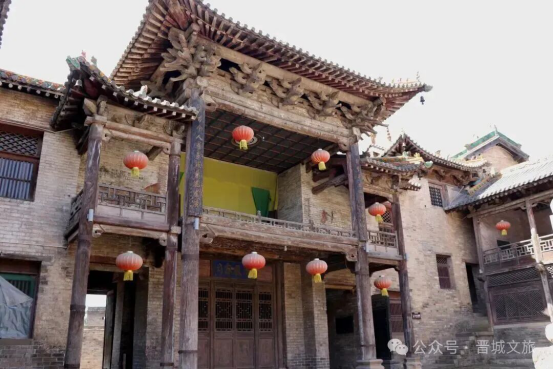
Tang Emperor Temple is located in the southwest corner of Guoyu Ancient City in Yangcheng, first built in the Zhizheng reign of the Yuan Dynasty. Its most iconic attraction is the opera tower above the mountain gate — the earliest liftable opera stage in China. Nearly square in shape, the tower boasts gorgeous glazed eaves and layered protruding bracket sets, retaining the typical three-sided viewing design of the early Ming Dynasty.
The opera tower is 4.5 meters high. In ancient times, opera-watching followed strict hierarchy: nobles and dignitaries watched from the side galleries on the upper level, women and children stood along the sides of the upper courtyard, while adult men viewed
performances from the lower courtyard. As the stage stood relatively high, audiences in the lower courtyard could barely see the show and mostly listened to the opera. Built level with the main hall, the stage was originally dedicated to worshipping King Tang, with operas performed specially for the king.
Ancient craftsmen designed exclusive grooves on the pillars to realize the lifting function of the stage. This one-of-a-kind structure, the first of its kind across the country, is recognized as the earliest liftable stage in China.
One ancient stage preserves the charm of a thousand years; one opera aria carries the sentiments of eternity. The ancient opera stages of Jincheng perfectly interpret the integration of traditional opera and ancient architecture. Pick an auspicious day to come to Jincheng, wander among these time-honored stages, and immerse yourself in the timeless elegance of traditional Chinese culture.